
[From the Field] How Local Governance and Value Chains Drive Change: A Field Visit to Machakos, Kenya
Date 2026.04.30
The performance of agricultural ODA projects cannot be measured simply by how much is produced.
What truly matters is how that production is embedded within local systems how it connects with institutions, markets, and people’s behaviors to become a sustainable structure.
In April 2026, KDS conducted a field monitoring mission in Machakos County, Kenya, under a rural development project in which it participates as a performance management partner. What was observed in the field went beyond conventional agricultural support it revealed a dynamic system where local governance and value chains were actively working together.
The project focuses on expanding the production of Orange-Fleshed Sweet Potato (OFSP) while simultaneously aiming to increase household income and improve nutrition. It adopts a comprehensive value chain approach that spans the entire process from seed distribution and climate-smart agriculture training to farmer organization, market linkages, processing, and distribution.
OFSP is rich in beta-carotene, making it an important source of nutrition in areas where vitamin A deficiency is prevalent. It is also relatively drought-tolerant, positioning it as a climate-resilient crop that can contribute to both improved nutrition and increased income in regions highly vulnerable to climate change.
A Project Structure Embedded in Local Government Systems
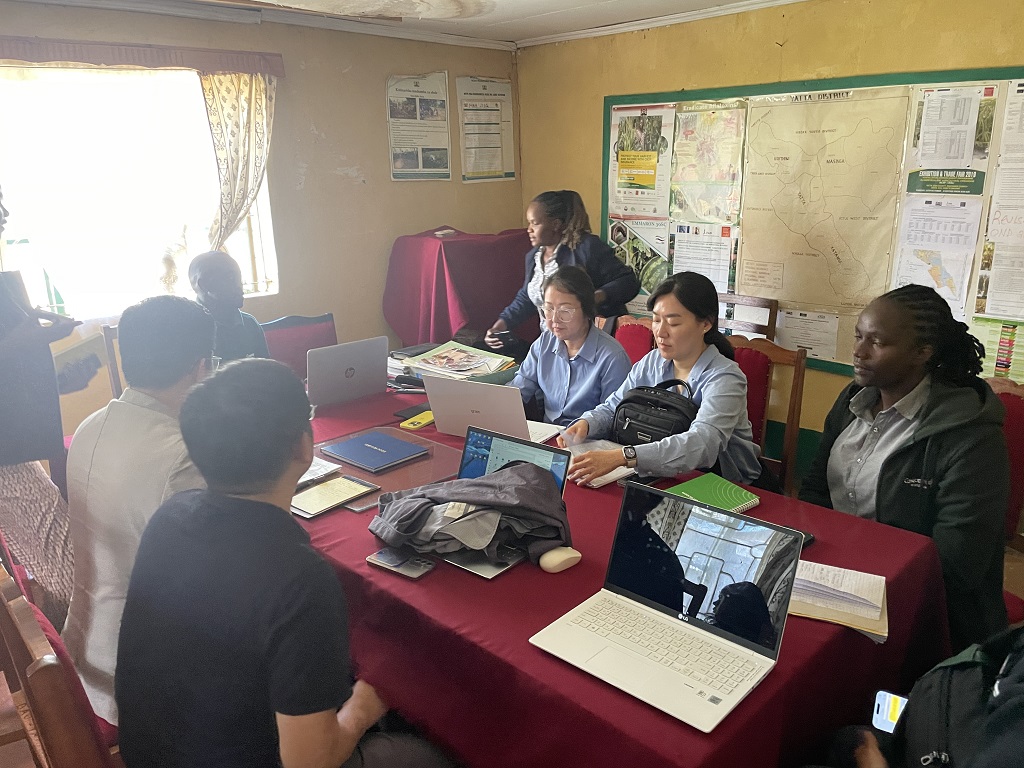
One of the most notable observations from the field was that the project is not operating as a stand-alone intervention, but is closely integrated into local government systems.
Machakos County demonstrated a clear understanding of the project’s objectives and structure, actively linking it with local agricultural policies and administrative frameworks. At the sub-county level, government actors play a central role in implementation mobilizing farmers, delivering training, facilitating technology adoption, and conducting monitoring activities.
Particularly noteworthy was the role of Community Resource Persons (CoRPs), who function as lead farmers engaged in digitally enabled extension work. These CoRPs regularly visit farms to monitor crop conditions while using a mobile-based data collection tool, iForm, to systematically record farmer profiles, production status, GPS coordinates, and field photos.
This approach represents a field-driven, data-based management system that complements limited public sector capacity while enabling more granular and real-time monitoring.
Change Starting from Farmers, Expanding Along the Value Chain
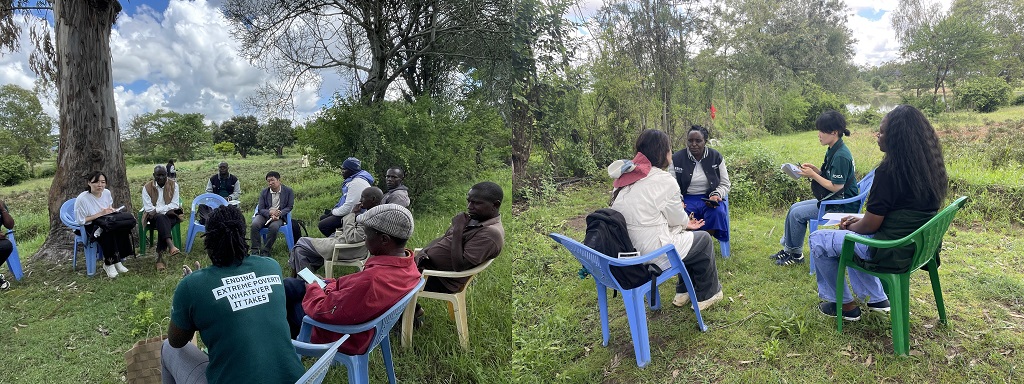
Farmers observed during the visit were not only cultivating a new crop, but also applying newly acquired knowledge and skills in practice, with some expanding into processing and marketing activities.
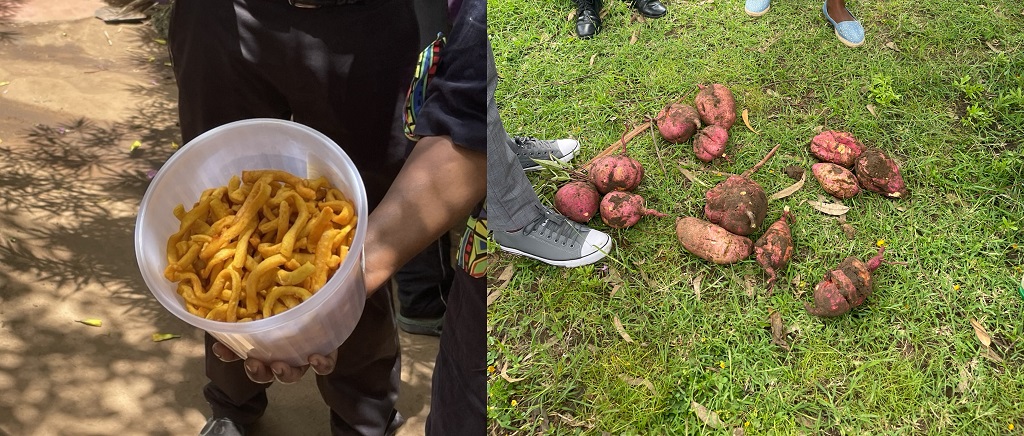
OFSP is increasingly recognized as a profitable alternative crop, and farmers are beginning to diversify their income streams through activities such as vine multiplication, small-scale processing, and local market sales.
In addition, some young farmers are exploring digital platforms to access information and connect with markets. This indicates a potential shift in which agricultural value chains evolve beyond production into broader areas such as distribution and marketing.
Emerging Challenges: Connecting to Markets
At the same time, a key challenge consistently identified in the field was market access.
As production scales up, securing stable market outlets becomes critical. Given that OFSP is still a relatively new crop in the local context, more systematic analysis of market demand is required. Stakeholders widely recognize market access and marketing as priority areas moving forward.
Moreover, increased production alone may not automatically translate into higher income. Strengthening collective marketing mechanisms such as farmer groups or cooperatives will be essential to ensure that productivity gains lead to tangible economic benefits.
The Role of Performance Management: Making Sense of Connections
Performance management goes beyond tracking indicators and producing reports.
It involves understanding linkages capturing changes that are not always visible in quantitative data, and analyzing both opportunities and constraints emerging from the field.
Its core role lies in reinforcing what works to generate synergies, while translating identified gaps into actionable recommendations.
As part of this mission, KDS also facilitated a capacity-building workshop for implementing partner staff, covering key topics such as agricultural value chains, gender integration, and performance management.
With additional field monitoring planned, KDS will continue to assess how farmers, institutions, and markets interact within the value chain ecosystem working together to foster sustainable and inclusive change.
